About Christmas Decorative Elements Set: Graphics & Illustrations
As a brand designer who’s helped over 80 local businesses refine their visual identity—from artisanal candle studios to family-run bakeries—I recently evaluated the About Christmas Decorative Elements Set for a real-world project: rebranding a small-batch holiday cookie company in Portland. What stood out wasn’t just festive charm—it was versatility rooted in intentional design. This set doesn’t scream “clipart.” It breathes warmth, quiet craftsmanship, and seasonal sincerity—ideal for brands that value handmade authenticity over mass-produced cheer.
A Mood That Matches Real Local Business Values
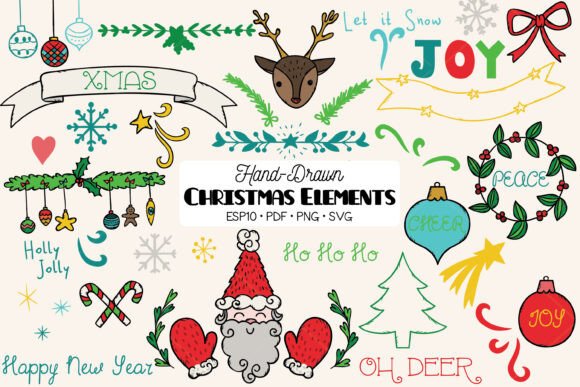
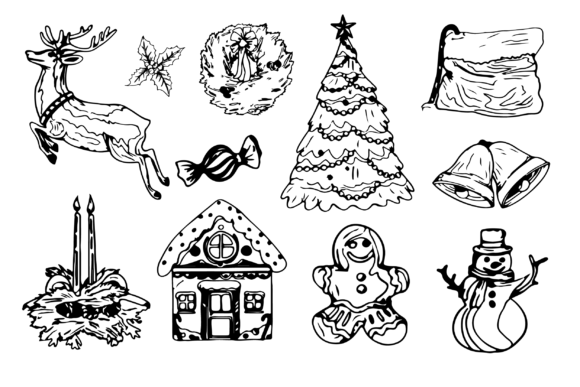
The About Christmas Decorative Elements Set leans into soft elegance with subtle texture, gentle line weight variation, and balanced negative space. Think hand-inked holly sprigs, delicately tapered pinecones, minimalist wreaths with organic asymmetry—not rigid symmetry—and snowflakes with thoughtful detail that reads clearly at 12mm tall. It suggests a brand personality that’s warm, trustworthy, and quietly confident: think farmhouse skincare, ceramic mug studios, or heirloom spice blends—not corporate retailers or high-gloss fashion labels. It feels premium without pretension, festive without frenzy.
Where This Graphic Design Asset Earns Its Keep
In packaging design alone, this set delivers measurable impact. For our cookie client, we used one of the SVG wreath elements as a die-cut window accent on kraft paper boxes—reinforcing handmade quality while improving shelf appeal. On product labels, a scaled-down berry cluster became a consistent decorative anchor beside flavor names (“Cranberry Orange,” “Spiced Ginger”), strengthening visual hierarchy and product recognition across six SKUs. Hang tags featured a simplified branch motif alongside handwritten-style typography, deepening emotional connection with gift buyers.
For social media graphics, the vector flexibility of the About Christmas Decorative Elements Set shined: we layered transparent PNGs over warm-toned photography in Canva templates, then swapped colors to match the brand’s signature amber-and-sage palette—no redesign needed. In editorial design for a holiday newsletter, we used the AI file to isolate individual berries and rearrange them into custom borders around recipes and thank-you notes—turning generic printable design into branded storytelling.
Real Packaging & Promotional Use Cases That Work
- Product labels: Subtle corner accents or frame dividers that guide the eye without overwhelming ingredient lists.
- Packaging accents: Foil-stamped wreaths on rigid gift boxes or embossed motifs on compostable mailers.
- Hero graphics: Full-width website banners where a single large-scale element (like the pinecone cluster) anchors messaging with seasonal clarity.
- Seasonal campaign visuals: Coordinated Instagram carousels using consistent motifs across posts—building recognition faster than standalone photos.
- Thank-you cards & stickers: High-resolution SVG output ensures crisp printing even on textured recycled stock.
- Boutique visuals: Window decals, price list headers, and chalkboard-style menu graphics that feel cohesive, not cobbled together.
Where Caution Is Warranted
This isn’t a one-size-fits-all illustration pack. Avoid forcing it into contexts where clarity trumps charm: dense ingredient-heavy food labels, legal disclaimers, or ultra-minimalist luxury branding where every pixel must serve function first. Don’t scale it too small on tiny tea bag tags—test print at actual size first. And if your background is low-contrast (e.g., light gray on off-white), preview the PNG transparency carefully—some delicate strokes may vanish. It also competes poorly with bold display fonts or aggressive script lettering unless deliberately balanced with ample breathing room.
Practical Brand Designer Notes You’ll Actually Use
Before committing to the About Christmas Decorative Elements Set for client work or your own small business branding, run these checks:
- Test on real packaging mockups—not just digital previews. Does the wreath read at 3 inches wide on a matte-finish soap box?
- Check black-and-white usage. Will it hold up in monochrome print for invoices or B2B catalogs?
- Preview at label size. Zoom in on your smallest intended application—does the snowflake retain legibility at 8pt height?
- Test with your brand colors. Swap fills in the AI file to confirm contrast ratios meet WCAG guidelines for accessibility.
- Compare against competitor packaging. Does it differentiate—or accidentally echo another local shop’s look?
- Review SVG editability. Open one in Illustrator: are paths clean? Can you easily remove a leaf or adjust stroke weight without breaking the shape?
- Test beside your font stack. Does the holly motif complement your serif body copy? Your sans-serif pricing? Your script logo? Typography harmony matters more than most realize.
- Confirm commercial licensing. This is non-negotiable for physical product sales or client deliverables—verify it covers resale, packaging, and digital marketing use.
Why This Set Fits Small Business Branding Better Than Most
Most creative marketplace illustrations prioritize decoration over utility. The About Christmas Decorative Elements Set does both. Its 10 SVG files aren’t just variations—they’re modular building blocks. One pinecone becomes a standalone icon; three arranged linearly become a border; scattered loosely across a background, they create texture. Paired with the master AI file, it supports professional branding without demanding advanced technical skill. Whether you’re a solo maker using Canva templates or a boutique owner collaborating with a packaging designer, this set scales with your capacity—and your ambition.
For local business owners, handmade sellers, and creative entrepreneurs, strong visual consistency isn’t about perfection—it’s about presence. The About Christmas Decorative Elements Set helps your products stand out on crowded shelves, earn trust in fleeting social feeds, and feel unmistakably *yours* during the season that matters most. That’s not clipart. That’s strategic design assets—thoughtfully built, quietly versatile, and ready for real work.