Linen-effect Decorative a with Peonies
As someone who’s stitched hundreds of custom pieces—from monogrammed baby blankets for boutique clients to limited-run embroidered patches for Etsy shops—I opened Linen-effect Decorative a with Peonies expecting charm, but what I found was something more intentional: quiet confidence. This isn’t just a letter with flowers tacked on. It’s a single-letter illustration where the linen texture grounds the peonies, and the peonies soften the letterform—making it feel hand-drawn, not algorithmically assembled. That balance matters when you’re building trust through handmade product.
First Impressions: When Simplicity Carries Weight
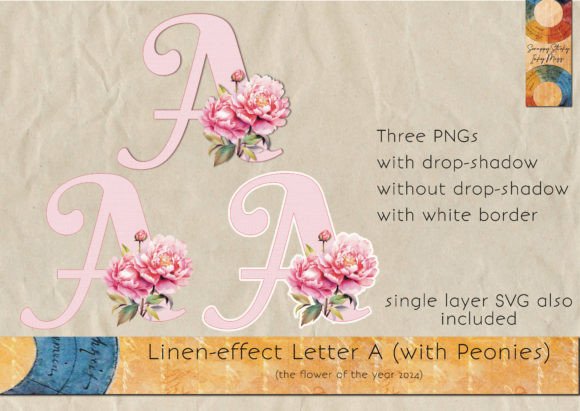
The “a” is lowercase, slightly rounded, with subtle irregularity in its stroke—like ink pressed gently into natural linen. The peonies bloom asymmetrically: one fuller at the top curve, another nestled near the counter, petals layered with soft gradation. There’s no heavy outlining, no sharp vector edges. Instead, the design breathes like a watercolor sketch translated into stitchable form. It reads as gentle, botanical, and quietly sophisticated—ideal for a small-batch apron line, a nursery-themed tea towel collection, or personalized sweatshirts for a local coffee shop’s staff.
Real-World Stitch Test: Tote Bag Edition
Last week, I prepped a set of organic cotton tote bags for a maker friend launching her herbal apothecary brand. She wanted one clean, recognizable mark—not a logo, but a signature element. We chose Linen-effect Decorative a with Peonies for the front pocket, centered just above the seam. On medium-weight canvas, with tear-away stabilizer and 40-weight rayon thread, the linen texture translated beautifully in satin stitch, while the peony petals held shape using a balanced mix of fill and running stitch. Customers noticed it immediately—not as “cute,” but as *considered*. That distinction elevates perceived value, especially for handmade product buyers scrolling Etsy or browsing craft fairs.
Where It Shines (and Where to Pause)
Linen-effect Decorative a with Peonies works exceptionally well for:
- Custom apparel: Sweatshirt embroidery (especially on brushed fleece), lightweight t-shirts with light stabilizing, and structured caps—when placed on flat panels like the front panel or back yoke.
- Baby embroidery: Soft cotton onesies and burp cloths—its low stitch density avoids stiffness, and the organic motif feels nurturing without being saccharine.
- Holiday and wedding gifts: Embroidered pillow covers for bridal showers, linen napkins for intimate dinners, or delicate patches sewn onto handmade guest books.
- Small shop product: As a consistent visual anchor across stationery, packaging stamps, and digital embroidery file previews—it builds brand recognition without repetition fatigue.
Use caution with:
- Curved or high-stretch surfaces: Like baseball caps’ crown or ribbed knit cuffs—fine details (petal tips, linen grain lines) may distort without precise digitizing adjustments.
- Thin or sheer fabrics: Lightweight voile or silk charmeuse may show stabilizer shadow or thread bleed unless tested first.
- Dark fabric backgrounds: The linen effect relies on tonal variation—on black or navy, ensure your thread colors retain enough contrast to read the texture. A quick black-and-white mockup helps spot this early.
- Frequent-wash items: While the design itself isn’t overly dense, check stitch density before committing to kitchen towels or children’s clothing—tight fills hold up better than airy openwork over time.
Design Judgment: Beyond Aesthetics
This isn’t just about how Linen-effect Decorative a with Peonies looks on screen—it’s about how it performs in commerce. As an embroidery designer, I’ve seen too many beautiful illustrations fail in translation: petals blur, letters collapse, texture vanishes under thread. Here, the peonies are spaced generously around the letterform—not crammed—so each petal has breathing room to resolve cleanly in satin stitch. The linen effect uses directional stitch paths, not random noise, meaning it reads as tactile even at modest sizes (3–4 inches wide).
That clarity builds customer trust. When someone orders a personalized gift, they’re buying intention—not just decoration. A crisp, well-resolved Linen-effect Decorative a with Peonies signals care in execution. For Etsy sellers, that translates to fewer “not what I expected” messages and more repeat buyers tagging your shop in heartfelt unboxings.
Practical Notes Before You Stitch
Before sending Linen-effect Decorative a with Peonies to your machine—or listing it as part of a commercial embroidery bundle—do these six things:
- Test the design on scrap fabric matching your final project’s weight and weave.
- Check thread color contrast on both light and dark backgrounds—especially where linen texture meets petal edges.
- Review stitch density: if it feels sparse, consider adding a light underlay; if overly dense, reduce fill percentage slightly for breathability.
- Confirm hoop size compatibility—this design scales well, but avoid shrinking below 2.5 inches without verifying detail retention.
- Inspect small corners and inner curves: do petal tips stay defined? Does the “a” counter remain open and legible?
- Verify licensing: since it’s listed as a Graphics asset under Illustrations, confirm whether your intended use—selling finished embroidered items or reselling the digital embroidery file—falls within permitted terms.
Remember: the best embroidery files don’t shout. They settle in—like a favorite apron, a well-loved tote, or a handwritten note tucked inside a gift. Linen-effect Decorative a with Peonies doesn’t try to be everything. It’s specific, grounded, and quietly memorable. That’s exactly what makes it reliable for real embroidery projects—and why it’s earned space in my go-to folder for client work, small shop launches, and those personal gifts where “handmade” needs to mean something true.