Black Rounded Decorative Shapes Vector
A Designer’s First Look: Clean, Quiet, and Surprisingly Versatile
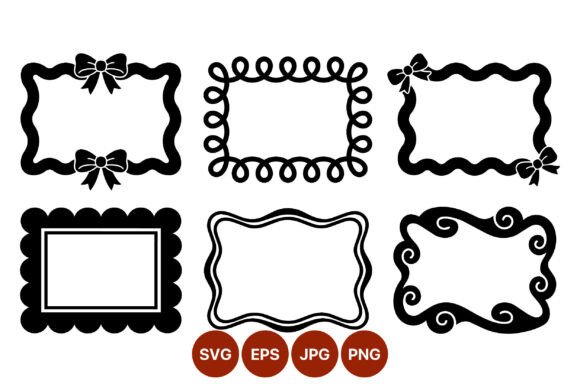
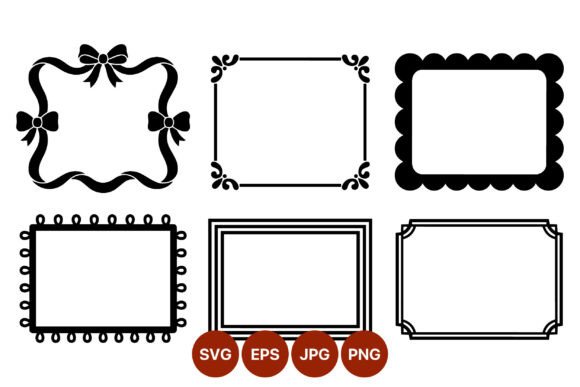
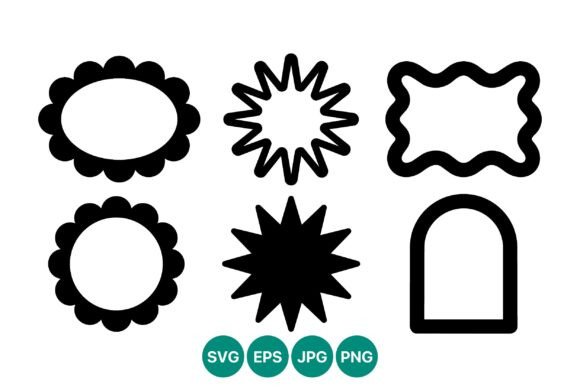
When I opened the Black Rounded Decorative Shapes Vector, my first thought wasn’t “Wow!”—it was “Yes, this will work.” That’s rare. Most decorative shape sets lean too ornate or too generic. This one strikes a quiet balance: six distinct black-and-white vector shapes—scalloped circles, starbursts, wavy rectangles, rounded arch frames, plus two more subtle variants—all rendered in crisp line art. There’s no fill, no gradient, no noise. Just confident, even strokes with gentle curves and intentional negative space. It feels handmade but precise, minimalist but warm. I immediately pictured it on a linen tea towel for a small-batch kitchen boutique—and then on a baby onesie, a patch for a denim jacket, and the corner of a custom embroidered tote bag.
Where It Shines in Real Embroidery Projects
I tested the Black Rounded Decorative Shapes Vector across three real projects: a cotton canvas tote bag (for a local café’s holiday gift set), a soft organic cotton baby blanket border, and a set of iron-on embroidered patches for a craft fair vendor. In each case, the simplicity paid off.
- Custom apparel: On midweight sweatshirts and t-shirts, the shapes translated beautifully using satin stitch outlines and light fill stitch where needed. The starburst held clarity at 3.5" wide; the scalloped circle framed a monogram without competing.
- Baby embroidery & nursery decor: The rounded arch frame worked perfectly as a gentle border around a stitched name on a muslin swaddle. Its smooth edges avoided visual harshness—critical for infant-facing items.
- Embroidered patch & small shop product: As a standalone motif on twill-backed patches, the vector clarity meant clean cut edges after trimming. No jagged lines, no lost detail—even at 2.25” diameter.
The line art style gives you flexibility: use it as-is for modern monochrome stitching, or treat it as a base for applique design—cut fabric inside the arch frame, or layer felt behind the starburst. It’s equally effective in digital embroidery file previews and printable mockups for Etsy listings.
Where to Proceed with Care
This isn’t a one-size-fits-all asset. Its strength is its restraint—and that restraint has limits. Here’s where I paused and adjusted:
- Small hoop sizes (under 4"): The wavy rectangle has subtle amplitude. At under 2", those waves can blur into a single thick line. Test on scrap first—especially for caps or curved surfaces like bucket hats.
- Textured or stretchy fabric: On terry cloth towels or ribbed knit baby caps, the fine line weight needs extra stabilizer support. Without it, running stitch sections can pucker or float.
- Dark or heavily printed backgrounds: Since it’s black-and-white vector art, contrast depends entirely on your thread colors. A black outline on navy fabric? Gorgeous. But on charcoal heather, test thread brightness—you may need white or metallic silver for legibility.
- Dense stitch areas: Don’t try to pack multiple shapes tightly together in one hoop. These are decorative accents—not all-over patterns. Overcrowding sacrifices their quiet elegance.
What It Adds to Your Handmade Product—and Your Customer’s Experience
Using the Black Rounded Decorative Shapes Vector doesn’t just decorate a product—it elevates perception. Customers notice the intentionality: the even spacing, the balanced weight, the absence of visual clutter. On a personalized gift, it signals care—not just customization. On an Etsy listing, it strengthens brand consistency when used across packaging, tags, and digital embroidery file previews. I’ve seen buyers comment specifically on “that clean little arch” on a pillow cover—it became a talking point, not just background detail.
It also builds trust. Because the shapes are scalable and vector-based, they hold up in both physical stitching and digital presentation. No pixelation in your shop banner, no distortion when resizing for a baby bib vs. a tote bag. That reliability makes it easy to reuse across your craft business—whether you’re selling finished products or digital embroidery files.
Practical Notes from My Embroidery Workbench
Before stitching your first project with the Black Rounded Decorative Shapes Vector, here’s what I do—and recommend:
- Always test on scrap fabric matching your final project’s weight and stretch.
- Check thread color contrast on both light and dark fabric backgrounds—black thread on black fabric won’t read, no matter how elegant the shape.
- Review stitch density in your embroidery software. Line art vectors often import with default fill settings—strip out unnecessary fills unless you want solid shapes.
- Confirm hoop size compatibility. The starburst and arch frames scale well—but verify maximum dimensions before hooping.
- Inspect corners and curves at 200% zoom. Vector files don’t always translate stitch-perfect; tiny points or tight scallops may need manual smoothing.
- Use tear-away + cut-away stabilizer combo for structured items (totes, aprons); lightweight cut-away alone works for baby clothes.
- If selling finished items or digital embroidery files commercially, review the license terms included in the ZIP folder. Not all Graphics or Illustrations assets permit resale of stitched goods or redistribution of source files.
One last note: these shapes don’t shout. They settle in. That’s their power. In a market saturated with busy, overdesigned motifs, the Black Rounded Decorative Shapes Vector offers quiet confidence—exactly what thoughtful embroidery design should deliver.